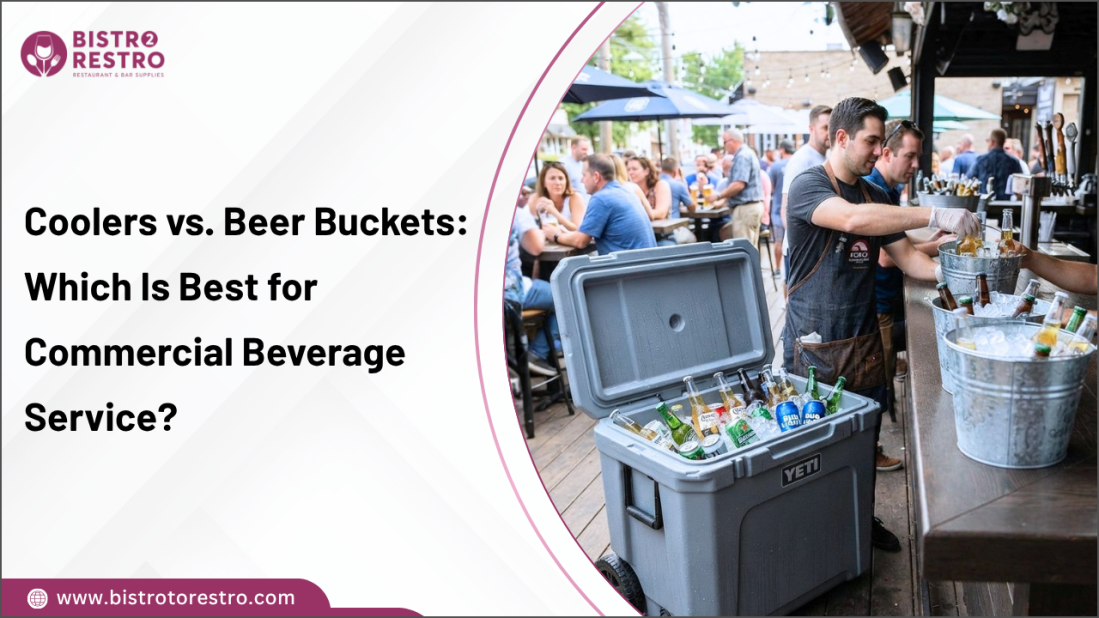
Keeping beverages cold is a basic expectation in the foodservice industry, but the equipment you choose can significantly influence service speed, customer satisfaction, and operating costs. Whether you run a busy sports bar, an upscale restaurant, a hotel, or a catering business, selecting the right beverage cooling solution helps maintain drink quality while supporting efficient operations.
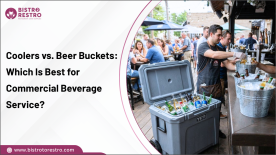
Two of the most common options are commercial beverage coolers and beer buckets. Although both are designed to keep drinks chilled, they serve different purposes. One prioritizes long-term cold storage and high-capacity service, while the other focuses on presentation and convenient table-side access.
This guide compares commercial beverage coolers and beer buckets to help you determine which option best fits your business.
Understanding Commercial Beverage Coolers and Beer Buckets
Before comparing their performance, it's important to understand how these two solutions differ.
What Is a Commercial Beverage Cooler?
A commercial beverage cooler is an insulated container or refrigeration unit designed to keep bottled or canned beverages consistently cold over extended periods. They are commonly found in:
Restaurants
Bars and pubs
Hotels
Stadium concession stands
Catering businesses
Outdoor events
Depending on the model, beverage coolers may feature wheels for mobility, drain plugs for easy cleaning, insulated walls, and large storage capacities.
What Is a Beer Bucket?
A beer bucket is a smaller container designed primarily for serving beverages directly to customers. Filled with ice, it keeps bottles or cans chilled at the table while creating an attractive presentation.
Beer buckets are frequently used for:
Bottle service
VIP seating
Outdoor dining
Special promotions
Private parties
Breweries and taprooms
Many establishments also customize beer buckets with their logos for branding opportunities.
Looking for dependable restaurant supplies to support your foodservice operation? Browse the extensive selection at BistroToRestro, your trusted source for commercial kitchen equipment, cookware, tableware, glassware, serving essentials, and more. With products from leading brands, competitive pricing, and a commitment to quality and reliability, we help restaurants, hotels, cafés, bars, and catering businesses find the right solutions for efficient daily operations.
Coolers vs. Beer Buckets: Comparing Performance, Capacity, and Efficiency
Although both products use ice to chill beverages, their performance differs in several important areas.
Feature | Commercial Beverage Coolers | Beer Buckets |
Primary Purpose | Bulk beverage storage and long-lasting cooling | Table-side beverage presentation and serving |
Cooling Duration | Keeps beverages cold for several hours with insulated construction | Keeps drinks chilled for shorter periods using ice |
Storage Capacity | High capacity; suitable for dozens or hundreds of bottles/cans depending on size | Typically holds 4–8 bottles or 6–10 cans |
Temperature Consistency | Maintains a more stable temperature throughout service | Temperature gradually rises as ice melts |
Ice Efficiency | Uses less ice over extended service due to better insulation | Requires more frequent ice replenishment |
Portability | Larger models often include wheels and handles for easy transport | Lightweight and easy for servers to carry to tables |
Best Service Style | Self-service stations, catering, festivals, and high-volume operations | Bottle service, VIP tables, restaurants, bars, and lounges |
Customer Experience | Prioritizes operational efficiency and beverage availability | Enhances presentation and premium dining experience |
Cleaning & Maintenance | May require draining melted ice and cleaning larger interiors | Quick to empty, wash, and sanitize after service |
Best For | Restaurants, hotels, catering companies, stadiums, outdoor events | Bars, breweries, patios, fine dining, and promotional beverage service |
Explore aguide to beer accessories, from growlers and markers to buckets and more, for efficient beverage service.
When Commercial Beverage Coolers Are the Better Choice
Commercial beverage coolers excel when businesses need to keep large quantities of drinks cold for extended periods.
They are particularly beneficial for:
High-Volume Beverage Service
Restaurants, bars, and event venues serving hundreds of beverages each day benefit from larger storage capacity and reduced ice replacement.
Outdoor Catering
Catering companies often operate in locations without refrigeration. Large insulated coolers help maintain beverage temperatures throughout the event.
Self-Service Beverage Stations
Many weddings, festivals, and corporate events use beverage coolers so guests can easily access drinks without waiting for staff assistance.
Long Events
Sporting events, concerts, fairs, and festivals often last several hours. Commercial coolers minimize the need for constant ice refills while maintaining beverage quality.
When Beer Buckets Deliver Better Value for Beverage Service
Beer buckets offer advantages that extend beyond simple cooling.
Enhanced Table Presentation
A bucket filled with chilled bottles creates an appealing visual presentation that encourages group ordering and premium beverage sales.
Faster Table Service
Servers can deliver multiple beverages in one trip, reducing return visits and improving efficiency during peak hours.
Premium Bottle Service
Upscale restaurants, lounges, and nightclubs frequently use beer buckets to elevate customer experience while maintaining proper serving temperatures.
Promotional Opportunities
Branded beer buckets featuring brewery or restaurant logos can reinforce brand recognition while supporting seasonal promotions and special events.
Space Efficiency
Beer buckets occupy minimal table space while still keeping drinks readily accessible to guests.
Watch the video below to learn how to choose the right beer bucket for high-volume bar service.
Summary: Choosing the Right Beverage Cooling Solution for Your Business
The best beverage cooling solution should align with how products move through your business, from back-of-house storage to point-of-sale service. Matching cooling design with turnover patterns, container formats, access frequency, and placement can improve workflow while reducing unnecessary cooling demand.
Key Takeaways:
Match cooling access with staff serving patterns.
Account for peak-hour door-opening frequency.
Select storage layouts suited to beverage container sizes.
Separate high-turnover drinks from reserve inventory.
Position cooling equipment near relevant service areas.
Consider recovery performance after frequent access.
FAQs
What is the main difference between a commercial beverage cooler and a beer bucket?
A commercial beverage cooler is designed for storing and cooling large quantities of beverages over long periods, while a beer bucket is intended for serving a smaller number of drinks directly to customers at the table.
How long can beverages stay cold in a beer bucket compared to a cooler?
Beer buckets generally keep beverages cold for one to three hours, depending on ice quantity and ambient temperature. Well-insulated commercial coolers can maintain cold temperatures for several hours or even throughout an entire event with proper ice management.
Which option is more cost-effective for restaurants and bars with high beverage sales?
Commercial beverage coolers typically provide better long-term value for high-volume operations because they reduce ice consumption, improve storage efficiency, and support faster beverage service.
Are insulated beer buckets suitable for outdoor commercial events?
Yes. Insulated beer buckets work well for outdoor dining, patios, private parties, and VIP service, although larger commercial coolers are usually more practical for storing bulk beverages during extended events.
What factors should businesses consider when choosing between beverage coolers and beer buckets?
Businesses should evaluate customer volume, service style, event duration, available space, storage capacity, maintenance requirements, and overall operating costs before selecting the most suitable beverage cooling solution.
Disclaimer: The information in this article is intended for general educational and informational purposes only. Equipment performance, cooling duration, and suitability may vary depending on product design. |