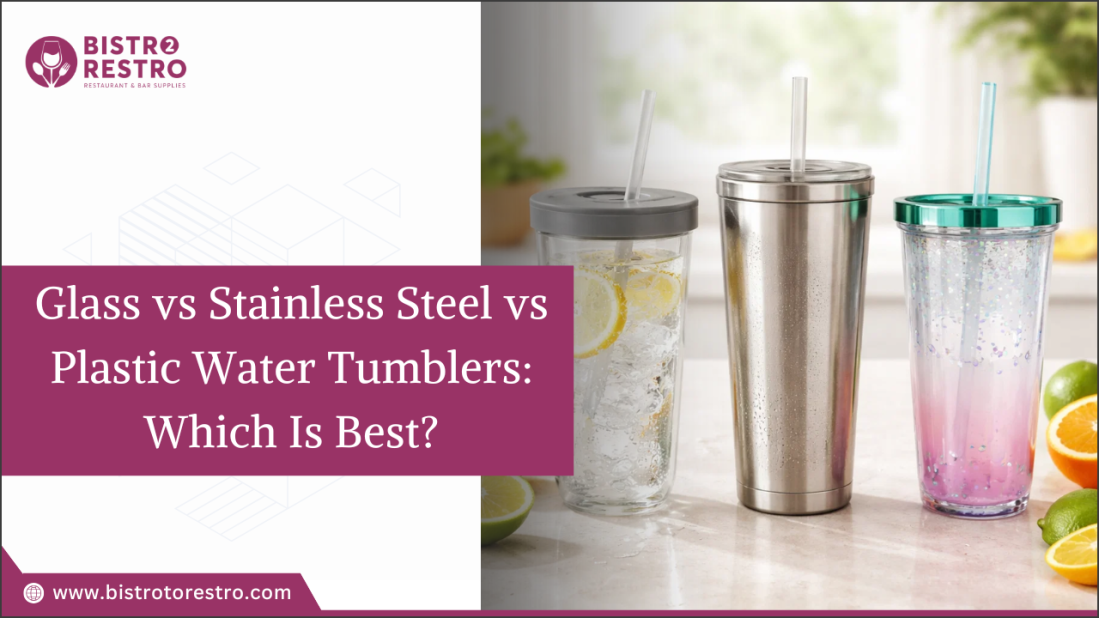
Choosing the right water tumbler can make a difference in taste, safety, and convenience. Glass tumblers are pure and chemical-free, giving a fresh taste but can break easily. Stainless steel tumblers are durable, often insulated, and keep drinks hot or cold for hours. Plastic tumblers are lightweight, affordable, and easy to carry, though they may retain odors or chemicals if not high quality.
Your choice depends on what matters most: glass for taste and eco-friendliness, stainless steel for durability and temperature control, and plastic for portability and convenience. Picking the right tumbler helps you stay hydrated safely and comfortably every day.
This blog explores the pros, cons, and ideal use cases of the best water tumblers, including glass, stainless steel, and plastic options.
Understanding the Basics of Water Tumbler Materials
Water tumblers are commonly made from glass, stainless steel, or plastic, and each tumbler material has unique features that affect taste, safety, durability, and convenience. Choosing the right one depends on your daily habits, lifestyle, and environmental priorities.
Glass: Known for its pure, chemical-free taste, glass doesn’t retain flavors or odors. It’s eco-friendly and fully recyclable, and it’s great for home, office, or light professional use. The main drawback is fragility, so it requires careful handling.
Stainless Steel: Highly durable and often insulated, stainless steel keeps drinks hot or cold for hours. It’s resistant to dents and cracks, making it ideal for travel, commuting, or outdoor activities. Slightly heavier than other options, but long-lasting and hygienic.
Plastic: Lightweight, affordable, and shatter-resistant, plastic is perfect for kids, students, or an on-the-go lifestyle. Opt for BPA-free options, as lower-quality plastics may retain odors or leach chemicals.
Consider your daily habits, health, and environmental priorities to choose a tumbler that fits your needs and keeps you hydrated safely.
Looking to upgrade your drinkware? Shop high-quality water tumblers at BistroToRestro, including glass, stainless steel, and BPA-free plastic options designed for better taste, durability, and stylish presentation, perfect for home, office, or casual restaurant and bar use.
Glass Water Tumblers: Pros, Cons & Best Use Cases
Glass tumblers are a top choice for those who value taste, safety, and style. Their pure, refreshing flavor ensures every sip is clean, making them suitable not only for home and office use but also for casual restaurant or bar settings, where presentation and hygiene are important. Glass water tumblers don’t retain odors or flavors, giving a fresh drinking experience every time, and they add an elegant, sophisticated touch to any table or countertop.
Pros:
Pure taste: Doesn’t alter the flavor of water, juices, or smoothies.
Safe & chemical-free: Free from BPA, phthalates, and other harmful plastics.
Eco-friendly: Fully recyclable and reusable, reducing environmental impact.
Elegant appearance: Enhances presentation at home, office, or when serving guests.
Cons:
Fragile: Can break if dropped.
Heavier than alternatives: Not ideal for commuting.
Limited insulation: Drinks don’t stay hot or cold for long.
Best Use Cases:
Glass water tumblers are ideal for restaurants, bars, home, or office, where taste, safety, and aesthetics matter most. They are perfect for water, juices, or smoothies, offering a stylish and eco-conscious drinking experience.
Stainless Steel Water Tumblers: Pros, Cons & Best Use Cases
Stainless steel tumblers are known for their durability, versatility, and ability to keep drinks at the right temperature. They are ideal for travelers, commuters, gym-goers, and outdoor enthusiasts, as well as for light use in restaurants or bars, where durability and hygiene are important. Many models are insulated, keeping beverages hot or cold for hours, making them perfect for water, juices, smoothies, or even hot drinks.
Pros:
Durable: Resistant to cracks, dents, and everyday wear.
Temperature retention: Insulated options maintain hot or cold beverages for hours.
Hygienic & chemical-free: Safe for long-term use without leaching chemicals.
Cons:
Cost: Typically more expensive than glass or plastic options.
Weight: Slightly heavier than plastic, though lighter than glass.
Metallic taste: Some users may notice a minor metallic flavor initially.
Best Use Cases:
Stainless steel water tumblers are perfect for travel, commuting, gym sessions, outdoor activities, or serving beverages in casual restaurant and bar settings. They combine durability, insulation, and style, making them a practical and reliable choice for daily hydration.
Plastic Water Tumblers: Pros, Cons & Best Use Cases
Plastic water tumblers are a lightweight, affordable, and versatile option. They are perfect for kids, students, on-the-go use, or high-volume settings, and can also be used in casual restaurant or bar environments where shatter-resistant drinkware is preferred. High-quality BPA-free plastic tumblers ensures safety while making them durable enough for everyday use. Their lightweight nature and variety of designs make them a practical choice for both personal and professional use.
Pros:
Lightweight & portable: Easy to carry and ideal for travel or active lifestyles.
Durable & shatter-resistant: Can withstand drops and rough handling.
Affordable: Budget-friendly compared to glass or stainless steel.
Versatile designs: Available in multiple colors, sizes, and styles.
Cons:
Chemical concerns: Low-quality plastic may leach BPA or other chemicals.
Retains odors & stains: Can absorb flavors from previous drinks.
Limited insulation: Drinks don’t stay hot or cold for long.
Best Use Cases:
Plastic tumblers are ideal for kids, students, outdoor activities, gyms, or casual restaurant and bar use, where lightweight, shatter-resistant, and budget-friendly drinkware is needed. They are suitable for water, juices, or smoothies in everyday or high-traffic settings.
Explore our Ultimate Guide to Choosing the Right Drink Tumbler for Bars to discover the best options for durability, style, and efficient service.
Summary: Which Water Tumbler Material Should You Choose?
Choosing the right water tumbler depends on your priorities, lifestyle, and how you plan to use it. Glass tumblers are perfect if you value pure taste, eco-friendliness, and an elegant look, but they are fragile and less portable. Stainless steel tumblers are durable, often insulated, and ideal for travelers, commuters, or outdoor activities, while also fitting restaurant or bar use where sturdiness and hygiene matter. Plastic tumblers are lightweight, affordable, and shatter-resistant, making them great for kids, students, gyms, or casual restaurant and bar use.
Ultimately, the best tumbler is the one that fits your daily habits and needs, whether it’s for home, office, or on-the-go, or in casual dining environments. Consider safety, durability, insulation, and style to make the right choice for your beverages.
Key Takeaways:
Glass: Best for taste, safety, and eco-conscious use; ideal for home, office, or table service in restaurants and bars.
Stainless Steel: Best for durability and temperature control; suitable for travel, outdoor use, or casual beverage service.
Plastic: Best for portability, affordability, and casual use; choose BPA-free options.
Consider Your Lifestyle: Pick a tumbler that matches your daily habits, whether at home, at the office, at the gym, or on the go.
Think About Versatility: Some tumblers work well for multiple drinks, such as water, juices, smoothies, or hot beverages.
FAQs
Are BPA-free plastic tumblers completely safe for daily use?
Yes, high-quality BPA-free plastic tumblers are safe for daily use, though lower-quality plastics may still retain odors or stains over time.
Do stainless steel tumblers affect the temperature of cold beverages over time?
Insulated stainless steel tumblers maintain cold or hot temperatures for several hours, making them ideal for drinks on the go.
Which tumbler material is best for serving acidic drinks like lemon water?
Glass or stainless steel tumblers are best for acidic drinks, as they won’t react with the beverage or alter the taste. Plastic is less ideal, especially if low-quality.
How do different tumbler materials impact long-term maintenance costs?
Glass may need careful handling to avoid breakage, stainless steel lasts long but costs more upfront, and plastic is affordable but may need replacing sooner if it stains or absorbs odors.
Are there hybrid tumblers that combine multiple materials for better performance?
Yes, some tumblers combine stainless steel exteriors with plastic lids or silicone grips to offer durability, insulation, and lightweight portability.
Disclaimer: This blog is for informational purposes only and is not intended as professional advice. The content is based on general research and user experiences, and individual results or preferences may vary. Always use your own judgment when selecting water tumblers for personal, office, or commercial use. |