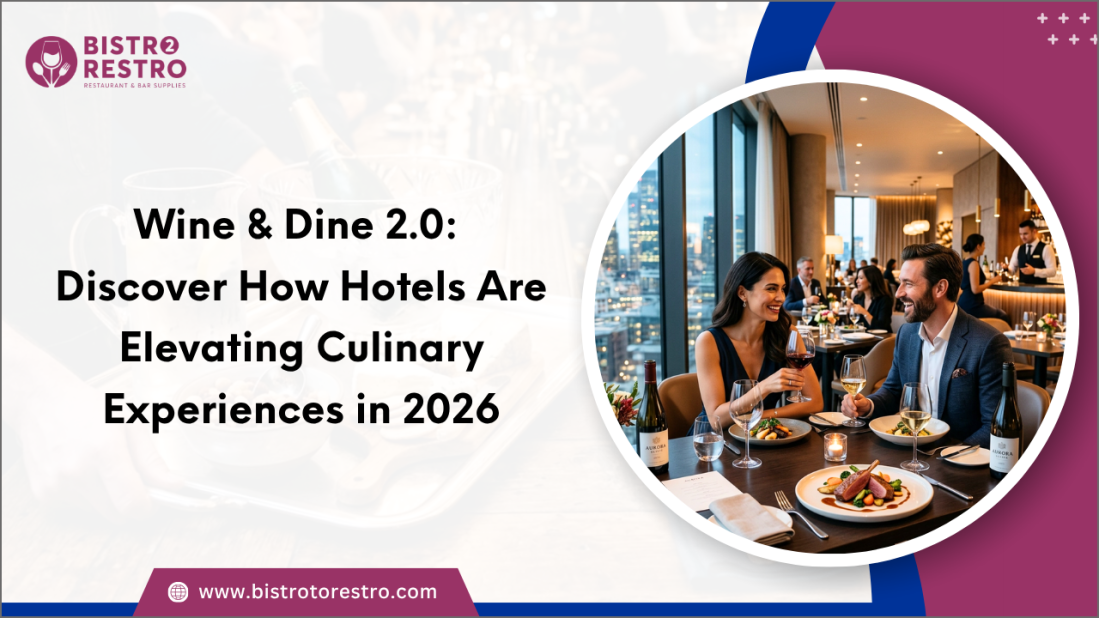
The hospitality industry in 2026 is redefining the way guests experience food and beverages. Modern travelers now expect more than traditional hotel dining; they seek personalized culinary journeys, immersive tasting experiences, and memorable wine and food pairings that reflect culture, creativity, and innovation. This transformation, often referred to as Wine & Dine 2.0, is pushing hotels to blend luxury hospitality with interactive dining concepts that create stronger emotional connections with guests.
From chef-led tasting events and sustainable farm-to-table menus to AI-driven personalization and premium beverage programs, hotels are investing heavily in next-generation culinary experiences. As guest expectations continue to evolve, hotels are turning dining into a major differentiator that enhances brand value, increases guest satisfaction, and shapes the future of modern hospitality.
The Growing Importance of Wine & Dine 2.0 in Modern Hotels
Wine & Dine 2.0 is transforming the hospitality industry as hotels focus on delivering elevated culinary experiences for modern travelers. Guests now expect personalized menus, premium wine programs, and immersive dining experiences that go beyond traditional hotel dining.
As competition in hospitality grows, hotels are investing in innovative dining concepts to improve guest satisfaction, strengthen brand identity, and create memorable experiences that encourage repeat visits.
Changing Expectations: Modern travelers prefer immersive culinary experiences instead of standard buffet dining. Guests now seek authentic flavors, curated wine pairings, and personalized food services that make hotel dining more memorable and engaging.
Competitive Advantage: Luxury hotels are using Wine & Dine 2.0 strategies to stand out in the competitive hospitality market. Exclusive chef events, gourmet menus, and premium beverage programs help hotels strengthen their brand image and improve guest loyalty.
Personalized Dining: Customized dining experiences are becoming increasingly important in hotel hospitality trends. Hotels are offering dietary-specific menus, AI-driven recommendations, and tailored wine selections to meet changing customer preferences and improve overall guest experiences.
Experiential Hospitality: Travelers now value experiences as much as accommodation quality. Hotels are introducing chef’s table dining, live cooking stations, and cultural food events to create interactive culinary experiences that increase guest engagement.
Sustainability Focus: Sustainable hotel dining is also shaping modern culinary programs. Many hotels are adopting farm-to-table sourcing, locally sourced ingredients, and eco-friendly practices to appeal to environmentally conscious travelers while enhancing their hospitality reputation.
How Hotels Are Transforming Dining into Immersive Culinary Experiences
Hotels are no longer just places to sleep; they are turning into primary dining destinations by blending food with theater, technology, and storytelling.
Multisensory Technology
Hotels are using advanced sensory technologies to create immersive dining environments that engage sight, sound, smell, and emotion alongside food.
3D Projection Mapping: Animation plays on tables and plates while guests wait for courses.
Soundscapes: Curated acoustic environments match the geographical origin of the ingredients.
Scent Diffusion: Aromas are released into the room to heighten the flavor profiles of the food.
Narrative-Driven Dining
Beyond technology, hotels are transforming meals into storytelling experiences by combining history, culture, and chef interaction to create deeper emotional connections with guests.
Historical Reenactments: Menus recreate famous historical banquets or local folklore.
Chef-Led Journeys: Kitchen staff guide guests through the sourcing and inspiration of each dish.
Secret Venues: Speakeasies and hidden rooms require passwords or covert entry points.
Hyper-Local Sourcing
To make these experiences more authentic, hotels are focusing on fresh, locally sourced ingredients and regional craftsmanship to deliver sustainable and exclusive culinary offerings.
On-Site Harvesting: Rooftop beehives, hydroponic gardens, and greenhouses provide instant ingredients.
Artisan Partnerships: Menus highlight hyper-local farmers, fishermen, and foragers by name.
Regional Crafting: In-house microbreweries and aging rooms create exclusive, property-only beverages.
Interactive Formats
In addition to immersive dining environments, hotels are creating hands-on culinary concepts that encourage guests to actively participate in cooking, learning, and engaging with culinary experts.
Masterclasses: Guests harvest ingredients alongside chefs before cooking their own meals.
Counter Dining: Open-kitchen seating eliminates the barrier between the guest and the culinary team.
Pop-Up Collaborations: Global guest chefs bring rotating, limited-time concepts to hotel spaces.
Key Innovations Shaping Hotel Wine and Food Programs in 2026
Hotel wine and food programs in 2026 are evolving through advanced technology, sustainability, and personalized dining experiences. Hotels are adopting smart hospitality trends to improve guest satisfaction, strengthen brand identity, and stay competitive in the modern hospitality industry.
The table below highlights the key innovations shaping hotel wine and food programs and their impact on guest experiences and business growth.
Key Innovation | Description | Guest Experience Benefit | Hotel Advantage |
AI-Powered Personalization | Hotels are using artificial intelligence to deliver customized dining recommendations based on guest preferences and dietary needs. | Guests receive personalized wine pairings, menu suggestions, and tailored dining experiences. | Improves guest satisfaction, personalization, and customer loyalty. |
Sustainable Culinary Practices | Many hotels are adopting farm-to-table sourcing, reducing food waste, and using locally sourced ingredients. | Travelers enjoy eco-friendly dining experiences with fresher and healthier food options. | Strengthens sustainability goals and enhances brand reputation. |
Smart Dining Technology | Digital menus, contactless ordering systems, and automated reservations are transforming hotel dining operations. | Provides faster, more convenient, and seamless dining experiences for guests. | Increases operational efficiency and improves service management. |
Premium Beverage Experiences | Luxury hotels are expanding curated wine pairings, craft beverage menus, and mixology programs. | Guests enjoy elevated wine and dine experiences with premium beverage selections. | Helps hotels attract luxury travelers and increase food and beverage revenue. |
Experiential Food Concepts | Hotels are introducing themed dining events, chef collaborations, and interactive tasting sessions. | Creates immersive culinary experiences that improve guest engagement and memorability. | Enhances brand differentiation and strengthens customer retention. |
Future Trends Redefining Hotel Culinary Experiences
The future of hotel dining is moving beyond standard room service and traditional restaurants by embracing hyper-personalization, automation, sustainability, and wellness-focused innovations.
AI-Driven Personalization
Hotels are using artificial intelligence and smart technologies to create highly customized dining experiences tailored to individual guest preferences and health needs.
Biometric Menus: Wearable tech syncs with hotel apps to suggest meals based on real-time nutritional needs.
Predictive Ordering: Smart rooms analyze guest preferences prior to arrival to stock preferred items.
Dynamic Flavoring: Kitchens use algorithmic seasoning to adjust spice and salt levels to specific cultural tastes.
Next-Gen Automation
To improve efficiency and precision, hotels are integrating advanced automation systems into both kitchen operations and guest dining services.
Robotic Prep: Automated kitchen lines handle repetitive tasks to allow human chefs to focus on presentation.
Autonomous Delivery: Sleek rovers navigate hotel elevators to bring hot, precise room service orders to doors.
Virtual Sommeliers: AI mirrors assist guests in picking wine pairings based on mood and palate data.
Eco-Positive Operations
As sustainability becomes a major priority, hotels are adopting eco-conscious culinary systems that reduce waste and improve environmental transparency.
Zero-Waste Loops: Closed-loop biodigesters turn kitchen scraps into fertilizer for the hotel's vertical farms.
Upcycled Menus: Chefs design high-end dishes utilizing strictly rescued ingredients and food byproducts.
Carbon-Tracked Dining: Menus print the exact carbon footprint next to each dish price for transparent choosing.
Wellness-Centric Spaces
Hotels are also transforming dining spaces into wellness-driven environments focused on improving guest health, recovery, and overall well-being.
Circadian Cooking: Meal timings and ingredient choices are engineered to help international travelers fight jet lag.
Nootropic Bars: Beverage programs shift focus toward adaptogen infusions that boost cognitive function and sleep quality.
Functional Gastronomy: Restaurants incorporate DNA-tested superfoods tailored to improve gut health and cellular renewal.
Summary: Wine & Dine 2.0 in Hotel Culinary Experiences
Wine & Dine 2.0 is transforming the hospitality industry by turning hotel dining into a more immersive, personalized, and technology-driven experience. Modern hotels are combining culinary innovation, sustainability, and experiential hospitality trends to improve guest satisfaction and strengthen brand identity. As traveler expectations continue to evolve, advanced wine and food programs are becoming a key factor in creating memorable hotel experiences.
Key Takeaways
Hotels are shifting from traditional dining services to immersive culinary experiences.
Personalized dining and AI-driven recommendations are improving guest engagement.
Sustainable hospitality practices are becoming essential in modern hotel food programs.
Interactive dining concepts such as chef-led events and live cooking stations are increasing in popularity.
Premium wine pairings and craft beverage programs are enhancing luxury hotel experiences.
Technology-driven dining solutions are helping hotels improve efficiency and customer satisfaction.
At BistroToRestro, we help hotels and hospitality businesses elevate their culinary experiences with innovative restaurant concepts, modern dining solutions, and customer-focused hospitality strategies. From immersive dining environments and premium beverage programs to operational excellence and guest engagement solutions.
Reference:
https://visithendersonvillenc.org/tag/cider-wine-dine-weekend
https://pmc.ncbi.nlm.nih.gov/articles/PMC9756831/
FAQs
1. What does Wine & Dine 2.0 mean in the hotel industry?
"Wine & Dine 2.0" refers to the modern transformation of hotel dining experiences through personalization, immersive culinary concepts, advanced technology, sustainability initiatives, and premium wine programs.
2. Why are culinary experiences becoming important for hotels?
Culinary experiences help hotels improve guest satisfaction, increase revenue opportunities, strengthen brand identity, attract experience-driven travelers, and encourage repeat bookings.
3. How are hotels using technology in dining experiences?
Hotels are using AI-powered menu recommendations, digital wine lists, smart kitchens, contactless ordering systems, augmented reality menus, and data analytics to improve personalization and operational efficiency.
4. What role does sustainability play in hotel dining in 2026?
Sustainability plays a major role in modern hotel dining through locally sourced ingredients, zero-waste cooking, eco-friendly packaging, energy-efficient kitchens, and partnerships with sustainable farms and wineries.
Disclaimer: The information provided in this blog is for general informational purposes only and is based on current hospitality and culinary industry trends for 2026. |